

Introduction
Weather has always played a critical role in human civilization. From agriculture and transportation to disaster management and daily life, accurate weather information helps individuals, businesses, and governments make informed decisions. Over the past few decades, technological advancements have revolutionized the way weather is monitored, analyzed, and predicted. This growing field is commonly known as Weather Tech.
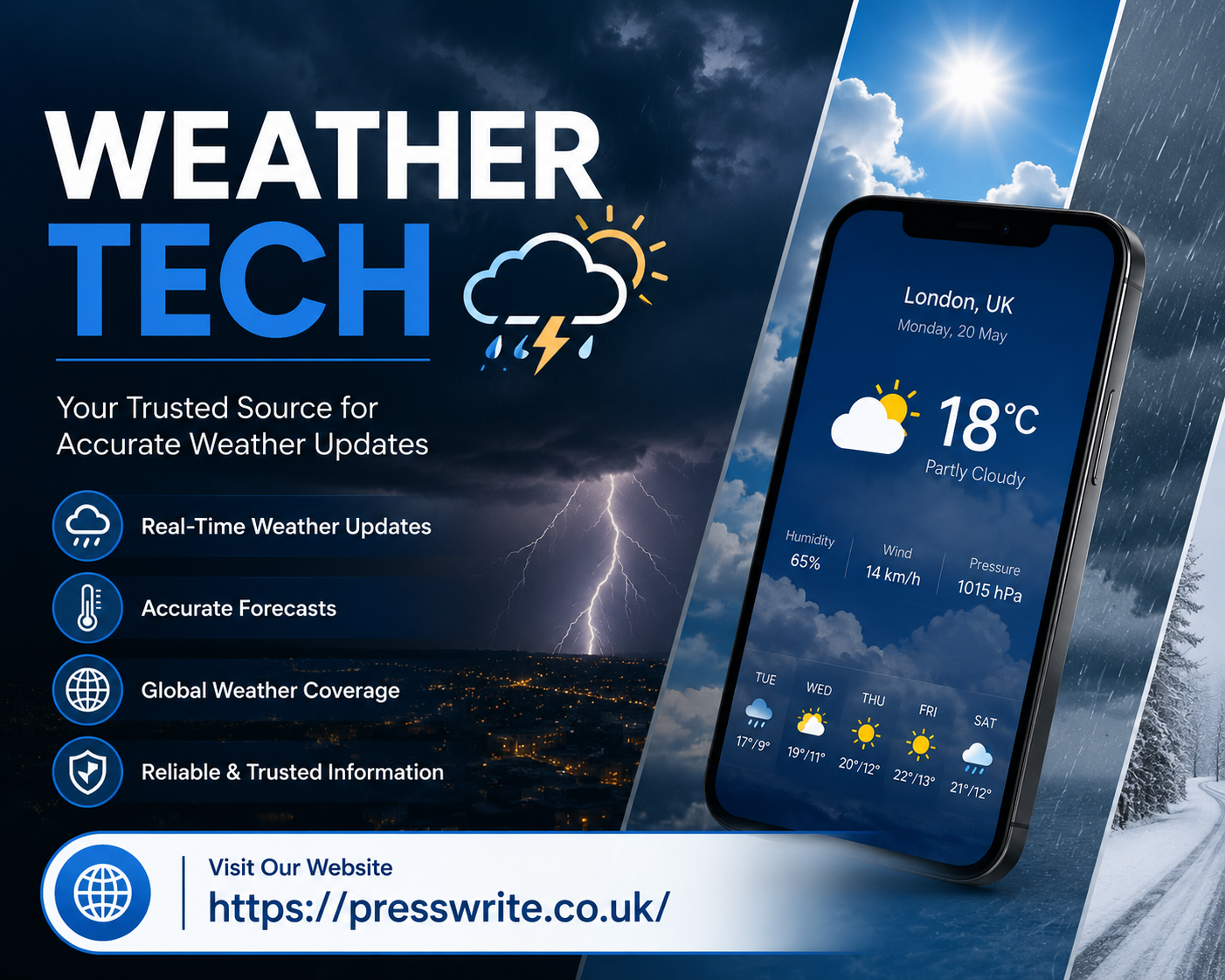
Weather Tech refers to the combination of meteorology, artificial intelligence, big data, satellite systems, Internet of Things (IoT), cloud computing, and advanced analytics used to understand and predict weather conditions. Modern Weather Tech solutions provide real-time forecasts, climate insights, severe weather alerts, and environmental monitoring services that significantly improve safety and productivity.
This article explores the concept of Weather Tech, its evolution, key technologies, applications, benefits, challenges, and future prospects.
What is Weather Tech?
Weather Tech is a broad term that describes technologies and digital systems designed to collect, process, analyze, and distribute weather-related information. It includes everything from weather satellites and radar systems to machine learning algorithms and mobile weather applications.
The primary objective of Weather Tech is to improve weather prediction accuracy and help societies respond effectively to changing environmental conditions. By combining advanced data collection methods with sophisticated forecasting models, Weather Tech enables meteorologists and organizations to anticipate weather events before they occur.
The Evolution of Weather Technology
Early Weather Observation
Centuries ago, weather predictions were based on observations of the sky, animal behavior, and seasonal patterns. Farmers and sailors relied heavily on experience and traditional knowledge.
Scientific Meteorology
The invention of instruments such as thermometers, barometers, and anemometers in the 17th and 18th centuries laid the foundation for scientific weather forecasting.
Modern Forecasting Era
During the 20th century, weather forecasting improved significantly with the development of:
- Weather balloons
- Radar technology
- Computer simulations
- Satellite monitoring
These innovations allowed meteorologists to gather vast amounts of atmospheric data and produce more reliable forecasts.
Digital Transformation
The rise of digital technologies in the 21st century introduced artificial intelligence, cloud computing, and IoT-based weather monitoring systems. These technologies now form the backbone of modern Weather Tech solutions.
Key Technologies Driving Weather Tech
1. Artificial Intelligence (AI)
Artificial Intelligence has become one of the most important components of Weather Tech. AI algorithms can analyze enormous datasets much faster than traditional forecasting methods.
AI helps in:
- Pattern recognition
- Storm prediction
- Climate modeling
- Flood forecasting
- Weather anomaly detection
Machine learning models continuously improve forecasting accuracy by learning from historical weather data.
2. Big Data Analytics
Weather forecasting requires processing data from multiple sources, including satellites, radars, sensors, and weather stations.
Big Data technologies help meteorologists:
- Analyze massive datasets
- Detect weather trends
- Improve forecast precision
- Generate real-time weather insights
Without Big Data, modern weather forecasting would be nearly impossible.
3. Satellite Technology
Weather satellites provide a global view of atmospheric conditions.
They monitor:
- Cloud formation
- Storm development
- Ocean temperatures
- Atmospheric moisture
- Air pollution levels
Satellite imagery allows meteorologists to track hurricanes, cyclones, and severe weather systems across the world.
4. Weather Radar Systems
Radar technology helps detect precipitation and storm activity.
Modern radar systems can:
- Track thunderstorms
- Measure rainfall intensity
- Detect hailstorms
- Monitor tornado formation
Radar data is crucial for issuing timely weather warnings and emergency alerts.
5. Internet of Things (IoT)
IoT devices have transformed weather monitoring by creating networks of connected sensors.
Examples include:
- Smart weather stations
- Agricultural sensors
- Environmental monitoring devices
- Air quality sensors
These devices provide continuous real-time data that improves local weather forecasting.
6. Cloud Computing
Weather forecasting requires enormous computational power.
Cloud computing enables:
- Faster data processing
- Real-time forecasting
- Global data sharing
- Scalable weather models
Many weather organizations rely on cloud platforms to manage and analyze weather information efficiently.
Applications of Weather Tech
Agriculture
Agriculture is one of the biggest beneficiaries of Weather Tech.
Farmers use weather forecasting tools to:
- Plan irrigation
- Schedule planting
- Predict drought conditions
- Protect crops from storms
Precision agriculture combines weather data with AI-driven analytics to maximize crop yields and reduce resource waste.
Aviation
Weather conditions significantly impact air travel.
Weather Tech helps airlines:
- Plan safe flight routes
- Avoid turbulence
- Reduce delays
- Improve fuel efficiency
Accurate forecasts contribute to safer and more efficient aviation operations.
Transportation and Logistics
Shipping companies, trucking fleets, and logistics providers rely on Weather Tech to optimize routes and avoid weather-related disruptions.
Benefits include:
- Reduced transportation delays
- Improved safety
- Lower operational costs
- Better delivery performance
Renewable Energy
Solar and wind energy production depends heavily on weather conditions.
Weather Tech supports renewable energy companies by:
- Forecasting solar radiation
- Predicting wind speeds
- Optimizing energy generation
- Improving grid management
Accurate weather predictions help maximize renewable energy efficiency.
Disaster Management
Weather Tech plays a vital role in protecting communities from natural disasters.
Applications include:
- Flood prediction
- Hurricane tracking
- Wildfire monitoring
- Heatwave alerts
- Severe storm warnings
Early warning systems save lives and reduce economic losses.
Insurance Industry
Insurance companies use Weather Tech to assess risks associated with weather events.
Applications include:
- Risk modeling
- Claims verification
- Disaster impact assessment
- Premium calculation
Advanced weather analytics help insurers make more informed decisions.
Weather Tech and Climate Change
Climate change is increasing the frequency and intensity of extreme weather events worldwide.
Weather Tech helps researchers:
- Monitor climate patterns
- Track rising temperatures
- Analyze greenhouse gas impacts
- Predict future climate scenarios
Advanced climate models provide valuable information for policymakers and environmental organizations.
By understanding climate trends, governments can develop strategies to reduce risks associated with global warming.
Smart Cities and Weather Technology
Many cities are adopting smart technologies to improve urban management.
Weather Tech contributes to smart cities by enabling:
- Flood monitoring systems
- Air quality tracking
- Heatwave management
- Traffic optimization
- Emergency response planning
Real-time weather intelligence helps city authorities make faster and more effective decisions.
Benefits of Weather Tech
Improved Forecast Accuracy
Modern forecasting systems provide highly accurate predictions compared to traditional methods.
Enhanced Public Safety
Early warning systems help communities prepare for severe weather events.
Economic Savings
Businesses can minimize losses by planning operations around weather conditions.
Better Resource Management
Weather intelligence supports efficient use of water, energy, and agricultural resources.
Environmental Protection
Weather monitoring helps detect environmental risks and supports sustainability initiatives.
Increased Productivity
Organizations can optimize workflows and reduce disruptions caused by weather-related events.
Challenges Facing Weather Tech
Despite its benefits, Weather Tech faces several challenges.
Data Quality Issues
Forecast accuracy depends on reliable data. Inaccurate or incomplete information can affect prediction quality.
High Infrastructure Costs
Weather satellites, radar systems, and supercomputers require significant investment.
Climate Complexity
Climate systems are extremely complex and difficult to model perfectly.
Cybersecurity Risks
Weather organizations increasingly rely on digital infrastructure, making cybersecurity a growing concern.
Data Integration Challenges
Combining data from multiple sources can be technically demanding and time-consuming.
The Role of Artificial Intelligence in Future Weather Forecasting
AI is expected to play an even larger role in the future of Weather Tech.
Emerging AI capabilities include:
- Hyper-local forecasting
- Real-time storm prediction
- Automated weather analysis
- Climate risk assessment
- Personalized weather recommendations
AI systems may soon provide highly accurate forecasts tailored to individual users and specific locations.
Emerging Trends in Weather Tech
Digital Twins of the Earth
Scientists are developing digital replicas of Earth’s climate systems to simulate environmental changes and predict future weather patterns.
Autonomous Weather Drones
Drones equipped with weather sensors can collect atmospheric data from hard-to-reach areas.
Edge Computing
Processing weather data closer to the source reduces latency and improves response times.
Blockchain for Weather Data
Blockchain technology may improve data transparency, security, and reliability in weather information systems.
Hyper-Local Forecasting
Future forecasting systems will provide neighborhood-level weather predictions with unprecedented accuracy.
Career Opportunities in Weather Tech
The growing Weather Tech industry offers numerous career opportunities, including:
- Meteorologist
- Climate Scientist
- Data Scientist
- AI Engineer
- Environmental Analyst
- Remote Sensing Specialist
- Weather Software Developer
- GIS Analyst
As demand for climate intelligence grows, Weather Tech professionals will become increasingly valuable across industries.
Future Outlook
The future of Weather Tech is incredibly promising. Advances in artificial intelligence, quantum computing, satellite technology, and environmental sensing are expected to transform weather forecasting capabilities.
Future systems may provide:
- Minute-by-minute forecasts
- Personalized weather alerts
- More accurate disaster predictions
- Better climate adaptation strategies
- Enhanced environmental monitoring
Governments, businesses, and communities will increasingly depend on Weather Tech to address climate-related challenges and improve resilience.
Conclusion
Weather Tech represents one of the most important technological advancements of the modern era. By combining meteorology with artificial intelligence, big data, IoT, cloud computing, and satellite systems, Weather Tech has dramatically improved our ability to understand and predict weather conditions.
Its applications extend across agriculture, aviation, renewable energy, transportation, disaster management, and climate research. As technology continues to evolve, Weather Tech will play an even greater role in protecting lives, supporting economic growth, and helping societies adapt to changing environmental conditions.
In a world facing increasing climate uncertainty, Weather Tech stands as a powerful tool for building a safer, smarter, and more sustainable future.