
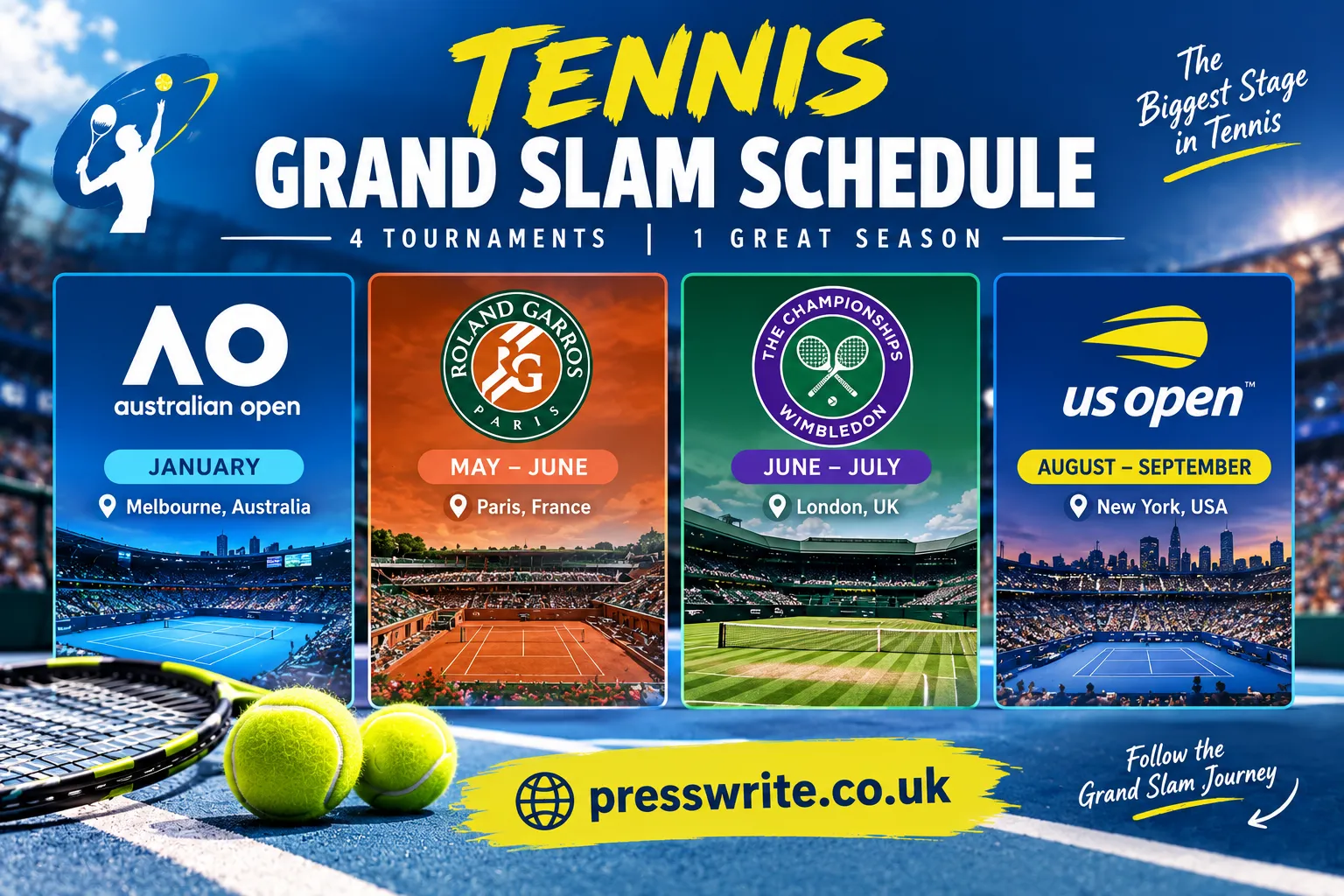
If you have ever tried to plan a vacation, a viewing party, or even just your weekend around tennis, you already know the frustration of not knowing exactly when the next major begins. The tennis grand slam schedule is the backbone of the entire professional tennis calendar, and understanding it is the difference between catching every big match and missing the moments that define a season. This guide breaks down the schedule tournament by tournament, explains why the order matters, and answers the questions fans search for most.
What Is the Tennis Grand Slam Schedule?
The tennis grand slam schedule refers to the fixed annual sequence of the four most prestigious tournaments in professional tennis: the Australian Open, the French Open (Roland Garros), Wimbledon, and the US Open. These four events, often called “majors,” anchor the entire tennis calendar and are spaced across the year to align with different surfaces, seasons, and continents.
Unlike smaller tournaments that can shift dates from year to year, the grand slams follow a fairly consistent pattern. Each one lasts roughly two weeks, features a 128-player singles draw for both men and women, and awards the most ranking points and prize money of any event on tour. Because of this consistency, fans, broadcasters, and players alike build their entire year around this rhythm.
The Four Grand Slams at a Glance
Before diving into the details of each tournament, here is a snapshot table showing the general timing, surface, and location of each major. Exact dates shift slightly year to year, so always check the official tournament website closer to the event.
| Grand Slam | Typical Timing | Surface | Location |
| Australian Open | Mid to late January | Hard court | Melbourne, Australia |
| French Open (Roland Garros) | Late May to early June | Clay court | Paris, France |
| Wimbledon | Late June to mid-July | Grass court | London, England |
| US Open | Late August to mid-September | Hard court | New York, USA |
This spread gives players roughly ten to fourteen weeks between each major, enough time to adjust to a new surface, recover physically, and build momentum through smaller warm-up tournaments.
Australian Open Schedule
When It Happens
The Australian Open opens the tennis season every January, making it the first opportunity for players to chase a title and for fans to see how the new year’s form is shaping up. It typically runs from the second week of January through to the end of the month, with qualifying rounds and fan events beginning even earlier.
Surface and Playing Conditions
Played on hard courts, the Australian Open is known for its fast, bouncy conditions and often brutal summer heat in Melbourne. This combination tends to favor players with strong serves and aggressive baseline games, though conditions can vary depending on humidity and the extreme heat policy in effect that year.
Why It Matters
Because it is the first major of the year, the Australian Open often sets the tone for the season. A deep run here can boost a player’s confidence and ranking points early, while an unexpected loss can trigger months of scrutiny.
French Open (Roland Garros) Schedule
When It Happens
Roland Garros arrives in late May and stretches into early June, marking the midpoint of the clay court swing that begins in Europe earlier that spring.
Surface and Playing Conditions
Clay is the slowest of the four surfaces, which means longer rallies, more physically demanding matches, and a premium on patience and topspin. Specialists who thrive on clay often become the players to watch during this stretch of the calendar.
Why It Matters
The French Open is widely regarded as the most physically taxing grand slam. Because points last longer and best-of-five matches on clay can stretch for hours, this tournament often rewards fitness and mental resilience as much as raw talent.
Wimbledon Schedule
When It Happens
Wimbledon typically begins in the final week of June and runs into the second week of July, following almost immediately after the clay season wraps up. This tight turnaround forces players to adapt quickly from slow clay to fast grass.
Surface and Tradition
Grass is the only surface used across the four majors, and it plays fast and low, rewarding serve-and-volley tactics and quick reflexes. Wimbledon is also the most tradition-bound of the majors, maintaining an all-white dress code and royal patronage that sets it apart from the other three.
Why It Matters
Because grass-court season is so short, Wimbledon often produces surprising results from players who do not typically shine on other surfaces. It is also considered by many longtime fans and analysts as the most prestigious of the four titles.
US Open Schedule
When It Happens
Closing out the grand slam calendar, the US Open runs from late August into mid-September, held in New York City during the height of late-summer heat and humidity.
Surface and Atmosphere
Like the Australian Open, the US Open is played on hard courts, but the atmosphere is famously electric, with night sessions, loud crowds, and a festival-like energy that differs from the more reserved tone of Wimbledon or Roland Garros.
Why It Matters
As the final major of the season, the US Open often determines who finishes the year with momentum heading into the ATP and WTA Finals. It has also historically been a stage for breakthrough performances from younger players eager to make a statement before the season winds down.
A Quick Note on Scheduling Consistency
While the general order of these four tournaments rarely changes, specific dates shift by a week or so from year to year depending on calendar quirks, broadcast agreements, and event logistics. It is always worth checking each tournament’s official site a few months in advance if you are planning travel or blocking out viewing time.
How the Grand Slam Calendar Shapes the Tennis Season
The tennis grand slam schedule does more than mark four isolated events. It structures the entire professional season into distinct phases:
- Hard court swing (January to March): Beginning with the Australian Open and continuing through hard court tournaments in the Middle East and North America.
- Clay court season (April to June): A build-up of European clay events culminating in the French Open.
- Grass court season (late June to July): A short, intense stretch of tune-up events leading straight into Wimbledon.
- North American hard court swing (August to September): Major tune-up tournaments feeding directly into the US Open.
- Asian and European indoor swing (September to November): The stretch after the last major, where players compete for ranking points before the season-ending finals.
Each phase demands different skills, different equipment, and different mental approaches, which is part of why tennis is often described as one of the most demanding sports in terms of adaptability.
Why the Order of the Slams Matters
The sequencing is not accidental. Starting the year on hard courts allows for a relatively neutral surface after the off-season. Moving to clay in spring takes advantage of the natural growing season in Europe, while grass season is deliberately kept short because grass courts are expensive and difficult to maintain during peak growth periods. Closing the year on hard courts in the US ties into the broader North American sports calendar and television scheduling.
Tips for Planning Around the Grand Slam Schedule
Whether you are a casual viewer or a dedicated fan planning a trip, a little preparation goes a long way:
- Mark the general windows (January, late May to June, late June to July, and late August to September) on your calendar as soon as the new year begins.
- Check official tournament sites two to three months ahead for exact dates, since minor shifts happen almost every year.
- If traveling, book accommodation early, especially for Wimbledon and the US Open, where demand spikes quickly.
- Follow ranking implications leading into each major, since seeding changes can significantly affect the draw and potential matchups.
- Keep an eye on weather and heat policies for the Australian Open and US Open, as extreme conditions can affect match scheduling and player performance.
Common Scheduling Changes and What Causes Them
Occasionally, grand slam dates shift due to broadcast negotiations, venue availability, or efforts to reduce the gap between the end of clay season and the start of grass season. In rare cases, extraordinary circumstances such as public health concerns have caused entire tournaments to be rescheduled or relocated, as seen historically with a delayed and relocated French Open. While such disruptions are uncommon, they are a reminder that even a schedule as established as the grand slam calendar can adapt when necessary.
FAQs About the Tennis Grand Slam Schedule
What are the four tennis grand slams?
The four grand slams are the Australian Open, the French Open (Roland Garros), Wimbledon, and the US Open.
What order do the grand slams happen in each year?
The season begins with the Australian Open in January, followed by the French Open in late spring, Wimbledon in early summer, and finally the US Open in late summer.
Which grand slam is played on grass?
Wimbledon is the only grand slam played on grass courts, giving it a distinct playing style compared to the other three hard and clay court majors.
Why is there such a short gap between the French Open and Wimbledon?
The gap is intentionally brief so that grass court preparation lines up with the natural growing season, even though it forces players to adjust their game quickly from clay to grass.
Do grand slam dates change every year?
Slight shifts happen occasionally due to calendar structuring, but the general windows for each tournament remain fairly consistent year over year.
Where can I find the most accurate, up-to-date grand slam schedule?
Each tournament’s official website is the most reliable source, since they publish confirmed dates, order of play, and any last-minute changes well ahead of the event.
Final Thoughts
The tennis grand slam schedule is more than a list of dates on a calendar. It is the rhythm that shapes how players train, how fans plan their year, and how the sport’s biggest storylines unfold across different surfaces and continents. Once you understand the logic behind the sequencing, the schedule stops feeling like a set of arbitrary dates and starts feeling like the natural pulse of the tennis season. Perhaps the more interesting question is not just when these tournaments happen, but how each one continues to shape the players and rivalries that define the sport long after the final ball is struck.