
If you’ve ever wanted to save a favorite track, podcast clip, or lecture for offline listening, chances are you’ve come across the term ytmp3 player converter. It’s one of the most searched phrases among people who want quick audio access without needing an internet connection every time. But behind the simple search bar lies a lot of confusion — how these tools work, whether they’re safe, and whether they’re even legal to use.
This guide breaks it all down in plain, easy-to-follow language, so whether you’re a complete beginner or someone who’s already tried a dozen converters, you’ll walk away knowing exactly what you’re dealing with — and how to do it smartly.
What Is a YTMP3 Player Converter?
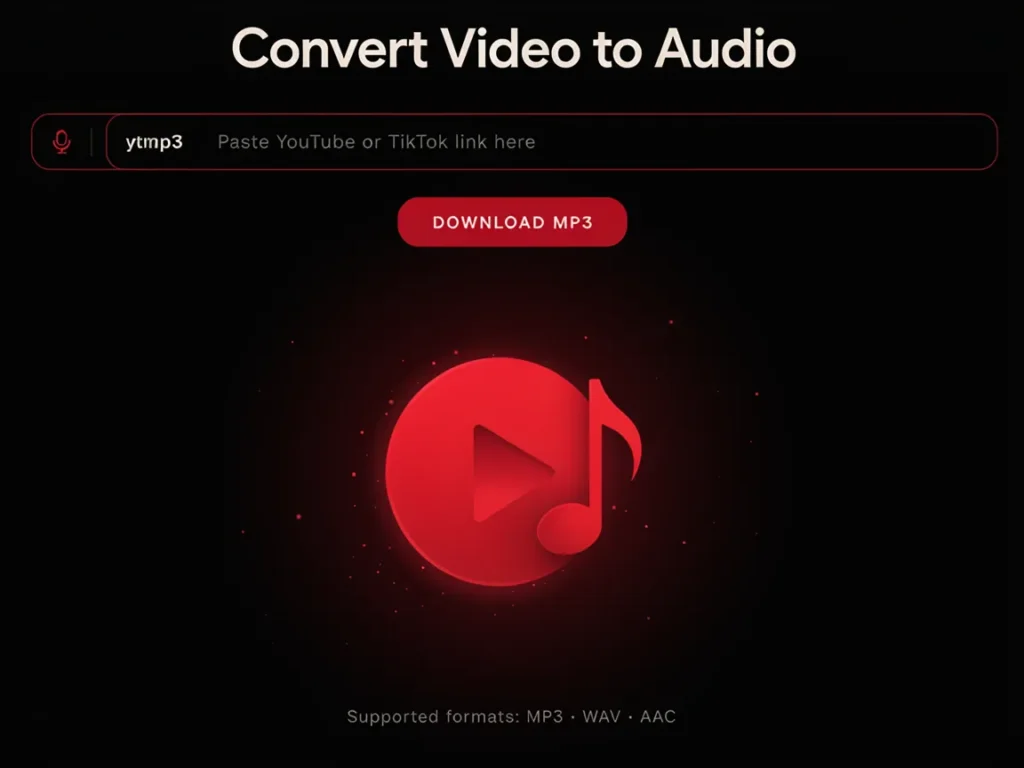
A ytmp3 player converter is a tool — usually a website, browser extension, or app — that extracts the audio track from a video and saves it as an MP3 file. Instead of streaming a video every time you want to hear the audio, the converted file lives permanently on your device and plays like any other song or recording.
These tools became popular because they solve a very simple, very human problem: not everyone has unlimited data, not everyone has reliable Wi-Fi on the move, and not every video actually needs to be watched — sometimes you just want to listen. Commuters, students, and people in low-bandwidth areas were among the earliest adopters of this kind of tool, and that demand hasn’t slowed.
Why Do People Search for YTMP3 Converters?
Understanding the “why” behind this search helps explain why the tool category has stayed relevant for so long.
- Offline access – No buffering, no data usage, works on flights or in areas with poor signal.
- Battery savings – Playing audio-only files uses far less battery than streaming video.
- Storage efficiency – Audio files are dramatically smaller than video files.
- Focus and simplicity – Some people prefer listening without a screen pulling their attention.
- Archiving – Saving audio from lectures, interviews, or personal recordings for later reference.
How Does a YTMP3 Converter Actually Work?
At a technical level, the process is fairly straightforward, even if the interface looks like magic to a first-time user.
Step-by-Step Conversion Process
- Link input – You paste the URL of the video you want to convert.
- Server processing – The converter’s backend fetches the video data and isolates the audio stream from the video stream.
- Format conversion – The isolated audio is encoded into MP3 (or occasionally other formats like WAV, AAC, or M4A).
- Bitrate selection – Many tools let you choose an audio quality level, typically ranging from 128kbps up to 320kbps.
- Download link generation – A downloadable file is created and offered to the user, often with a countdown or “click here” prompt.
- Local storage – The MP3 is saved to your device, ready for offline playback anytime.
The entire process usually takes anywhere from a few seconds to a couple of minutes, depending on the length of the source audio and how busy the converter’s servers are at that moment.
Popular Types of YTMP3 Converters
Not all converters work the same way, and picking the right category matters more than most people realize.
Online Web-Based Converters
No installation needed — you simply paste a link and download the result. These are the most common type because of their convenience, but quality, speed, and reliability vary enormously from one site to another.
Browser Extensions
These add a “convert” button directly inside your browser toolbar, saving you the extra step of copying and pasting links into a separate website. They’re fast, but they also require you to trust the extension with certain browser permissions.
Desktop Software
Built for people who convert frequently or in bulk. These programs often support batch processing — converting dozens of files in one go — along with more control over output quality and format.
Mobile Apps
Designed for on-the-go conversion directly from a phone. Many official app stores restrict or remove these tools due to policy conflicts, so mobile options are often less consistent than their web-based counterparts.
Table: Comparing Converter Types
| Type | Ease of Use | Speed | Best For | Setup Required |
| Web-Based | Very Easy | Fast | One-off conversions | None |
| Browser Extension | Easy | Fast | Frequent, casual use | Minimal |
| Desktop Software | Moderate | Fastest | Bulk/batch conversions | Yes |
| Mobile App | Easy | Moderate | On-the-go use | Minimal |
Is Using a YTMP3 Converter Legal?
This is the question most people skip — and honestly, it’s the one that matters most.
- Downloading copyrighted audio without permission from the rights holder generally violates copyright law in most countries.
- Most video platforms’ terms of service explicitly prohibit downloading content through third-party tools, regardless of whether it’s for personal use.
- Converting content that is royalty-free, public domain, or your own original upload is typically fine, since you either own the rights or the content was never restricted in the first place.
- Personal, non-commercial use is sometimes treated more leniently in certain jurisdictions than commercial redistribution, but this varies heavily by country and isn’t a guaranteed legal shield.
In short: the legality depends entirely on what you’re converting and who owns it — not on the tool itself. The converter is neutral; how you use it is what determines whether you’re on solid legal ground.
Safety and Privacy Risks to Know
Because many converter sites are free and ad-supported, they come with real risks that are worth understanding before you click “convert.”
- Malicious ads – Some sites are packed with intrusive, deceptive, or even harmful advertising designed to trick users into clicking the wrong thing.
- Fake download buttons – Multiple “Download” buttons on a single page often lead to malware or unwanted software instead of your actual file.
- Browser extension permissions – Some extensions request far more access than they realistically need, including the ability to read and modify data on every website you visit.
- Data logging – Certain converters track the links you paste and quietly build usage profiles or browsing histories.
- Pop-up redirects – Clicking anywhere on the page, not just the intended button, can trigger unwanted redirects to unrelated or unsafe sites.
Features to Look for in a Good Converter
If you decide to use one of these tools, a few quality markers can help separate the trustworthy ones from the risky ones.
- Clear, single download buttons with no surrounding ad traps
- No mandatory account creation or email sign-up
- HTTPS-secured websites (look for the padlock icon)
- A transparent, easy-to-find privacy policy
- No forced software bundles or “helper” downloads
- Consistent, predictable output quality across multiple uses
Legitimate Alternatives for Offline Listening
Before reaching for a converter, it’s worth knowing there are fully legal ways to get offline audio, and in many cases they’re just as convenient.
- Streaming app offline mode – Most major music and podcast apps let you download content directly within the app, fully licensed and ready for offline playback.
- Purchasing tracks – Buying MP3s directly from artists or official stores supports creators directly and comes with zero legal ambiguity.
- Creative Commons libraries – Sites offering royalty-free or Creative Commons–licensed music let you download and use audio without any legal risk.
- Podcast apps – Almost all podcast platforms support native offline downloading, so a converter isn’t even necessary for that use case.
- Public domain archives – Historical recordings, speeches, and older music that have entered the public domain are freely downloadable from official archive sites.
Tips for Safer Conversions
- Stick to content you actually have the right to convert — your own uploads, royalty-free tracks, or public domain audio.
- Use an ad-blocker to reduce the risk of malicious pop-ups and fake buttons.
- Avoid entering personal information, especially payment details, on converter sites.
- Scan downloaded files with antivirus software before opening them.
- Prefer well-known, long-standing tools over brand-new or obscure sites with no track record.
Common Mistakes Beginners Make
- Clicking the first “Download” button they see, without checking whether it’s actually an ad
- Installing unnecessary browser extensions “just in case they’re useful later”
- Assuming a tool is safe simply because it’s popular or ranks high in search results
- Not checking whether the content is copyrighted before converting it
- Ignoring browser warnings about unsafe sites in the interest of speed
Comparing Free vs. Paid Conversion Tools
Not every converter is free, and the paid options do offer some genuine advantages worth weighing.
- Free tools typically rely on ads for revenue, which can mean slower speeds, lower audio quality caps, and more intrusive interfaces.
- Paid tools often provide faster processing, higher bitrate options, batch conversion, and a cleaner, ad-free experience.
- Freemium models let you test basic functionality before deciding whether the premium tier is worth the cost for your usage level.
For occasional, light use, a reputable free tool is usually sufficient. For heavy, frequent use, a paid option can save time and reduce exposure to ad-related risks.
Frequently Asked Questions (FAQ)
Is a ytmp3 player converter free to use?
Most are free, though some offer premium tiers with faster speeds, higher-quality output, or batch processing.
Do I need to install software to convert audio?
No — most modern converters work directly in a browser, though desktop apps exist for heavier, more frequent use.
Can converting videos to MP3 get my account banned?
Using third-party converters doesn’t usually affect your platform account directly, but it may still violate that platform’s terms of service, which carries its own risks.
What audio quality can I expect?
Quality depends on the source video and the converter’s settings, typically ranging from 128kbps to 320kbps.
Are there safer alternatives to random converter websites?
Yes — official offline-download features within streaming and podcast apps are generally safer and fully legal, since the content is licensed for that purpose.
How long does a typical conversion take?
Most conversions finish within seconds to a couple of minutes, depending on the length of the audio and server load at the time.
Can I convert multiple files at once?
Only certain tools, usually desktop software, support batch conversion. Most web-based converters process one file at a time.
Final Thoughts
A ytmp3 player converter can be a genuinely useful tool when it’s used the right way — for content you’re actually allowed to convert, from a source you trust, with reasonable precautions in place. But convenience shouldn’t come at the cost of safety or legality. Before you paste that next link, it’s worth pausing for a second: is this something you’re truly free to download? That single question makes the difference between a smart shortcut and a risky click — and it’s the one thing most guides on this topic never bother to mention.
