


Introduction
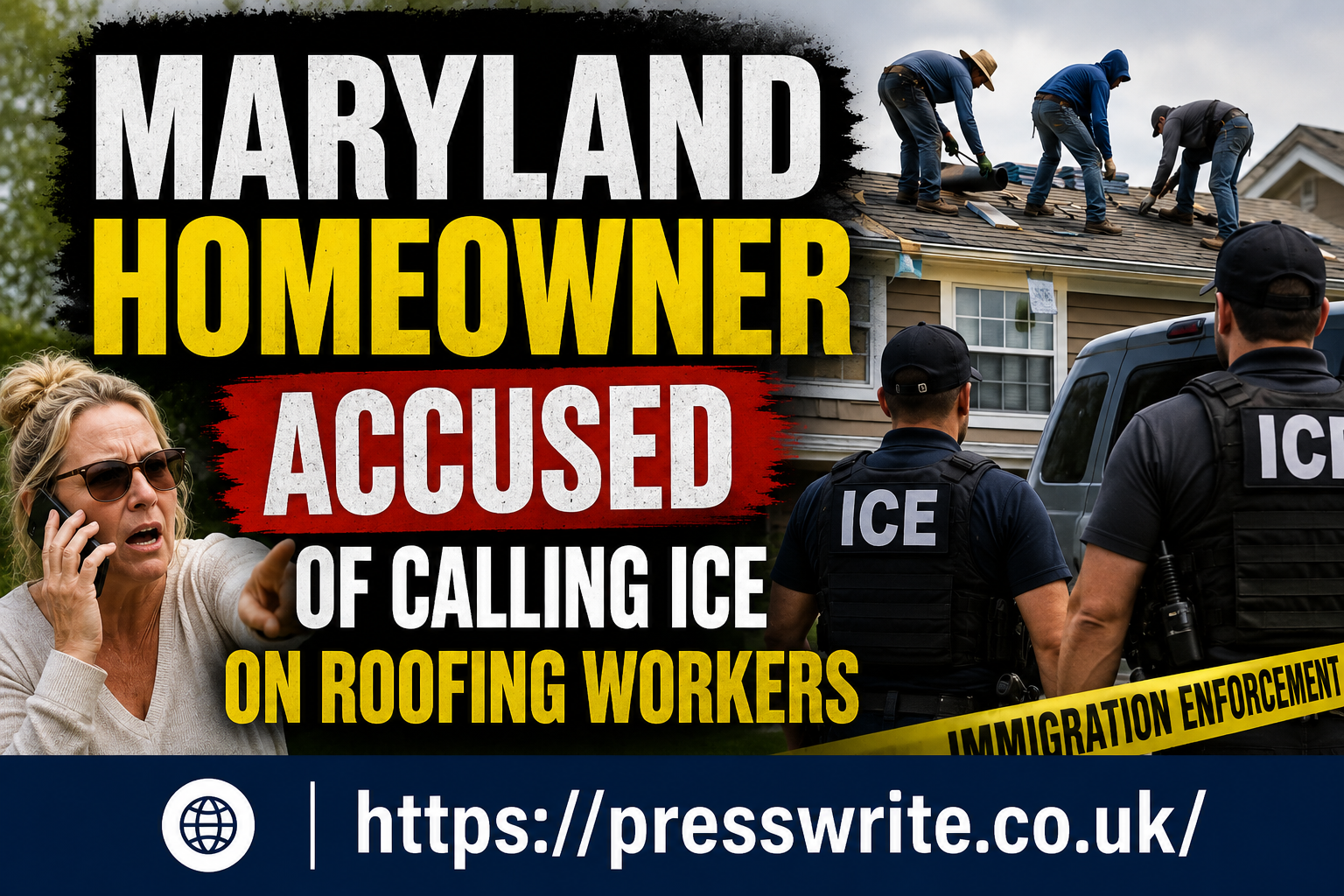
A controversial incident involving a Maryland homeowner and a group of roofing workers has ignited widespread discussion across the United States. The story gained national attention after videos circulated online showing immigration agents detaining several workers at a residential roofing job in Cambridge, Maryland. The incident quickly became a flashpoint in ongoing debates surrounding immigration enforcement, labor rights, and ethical business practices.
The controversy centers on allegations that a homeowner called U.S. Immigration and Customs Enforcement (ICE) on workers who had been hired to perform roofing work at her property. While social media users and some reports accused the homeowner of attempting to avoid paying for completed labor, federal officials later disputed claims that the homeowner’s call directly triggered the arrests.
As more details emerged, the case evolved into a broader conversation about the relationship between immigration enforcement and the American workforce, particularly in industries that heavily rely on immigrant labor.
How the Incident Unfolded
According to reports, a group of roofing workers was performing construction work at a home in Cambridge, Maryland, when ICE agents arrived at the property. Videos shared online showed officers detaining several workers while others remained on the roof.
The footage quickly spread across social media platforms, attracting millions of views and generating intense public reaction. Many viewers expressed outrage after allegations surfaced that the homeowner had intentionally contacted immigration authorities while the workers were on the job.
One of the workers reportedly livestreamed the incident, documenting the arrival of federal agents and the subsequent detentions. The emotional video became a key source of information for the public and fueled speculation about the homeowner’s role in the operation.
The workers involved were reportedly of Guatemalan origin, and several were taken into custody during the enforcement action. Family members and community advocates later voiced concerns about the impact of the arrests on the workers and their loved ones.
Social Media Reactions and Public Outrage
The viral nature of the video transformed what might have been a local immigration enforcement action into a national controversy. Across platforms such as X, Facebook, TikTok, and Reddit, users debated the ethics of the homeowner’s alleged actions.
Many commentators argued that if the homeowner knowingly hired the workers and later reported them to immigration authorities, such behavior would represent a serious ethical violation. Critics claimed that using immigration enforcement as leverage against workers could amount to exploitation.
Others expressed sympathy for the workers, noting that many immigrant laborers take on physically demanding jobs that are often difficult to fill. Labor advocates argued that immigrant workers play an essential role in industries such as roofing, construction, agriculture, and landscaping.
The story also triggered political debates. Some users viewed the incident as evidence of flaws within the immigration system, while others defended the enforcement of immigration laws regardless of the circumstances.
The polarized reactions reflected broader divisions in American society regarding immigration policy and labor practices.
ICE Responds to the Allegations
As public attention intensified, ICE released a statement disputing key aspects of the viral narrative.
According to agency representatives, the arrests were part of a targeted enforcement operation and were not initiated by a homeowner’s tip. Officials stated that immigration agents had already been conducting operations in the Cambridge area when the arrests occurred.
ICE further claimed that several individuals detained during the operation had existing removal orders and immigration violations. Agency officials emphasized that the enforcement action was planned and not a direct response to a complaint from the homeowner.
This statement introduced a significant contradiction to the version of events circulating online.
While many social media posts portrayed the incident as a homeowner reporting workers to avoid payment, ICE maintained that the operation had been underway independently of any homeowner involvement.
As a result, questions remain regarding the precise sequence of events that led to the arrests.
Claims About Unpaid Roofing Work
One of the most widely discussed aspects of the controversy involves allegations that the homeowner sought to avoid paying approximately $10,000 for roofing services.
According to claims shared online, the workers had nearly completed a multi-day roofing project when immigration authorities arrived. Supporters of this theory argued that the timing appeared suspicious and suggested the homeowner may have been attempting to evade payment obligations.
However, not all reports support this version of events.
Some accounts indicate that the workers were just beginning the project when the enforcement action occurred. These conflicting descriptions have made it difficult to establish a definitive timeline.
As of now, no publicly available court records or official investigations have confirmed that the homeowner intentionally used immigration enforcement to avoid paying workers.
Without verified evidence, the allegation remains a subject of dispute rather than an established fact.
Legal Questions Raised by the Case
The Maryland roofing incident has generated significant legal discussion.
Legal experts note that if a homeowner knowingly hired workers and then attempted to use immigration enforcement as a means of avoiding payment, such actions could potentially raise civil liability issues.
Potential legal concerns could include:
- Breach of contract claims
- Wage theft allegations
- Fraud-related claims
- Labor law violations
- Unjust enrichment disputes
However, the legal implications would depend heavily on the facts of the case and whether evidence supports the allegations.
At the same time, immigration law experts emphasize that immigration status does not automatically eliminate a worker’s right to compensation for labor already performed.
Courts in various jurisdictions have recognized that workers may still have rights to unpaid wages regardless of immigration status.
Because no formal charges have been announced against the homeowner, much of the legal discussion remains hypothetical.
The Role of Immigrant Labor in Roofing and Construction
The controversy has also highlighted the significant role immigrant workers play in the American construction industry.
Roofing is widely regarded as one of the most physically demanding occupations in the country. Workers often face extreme weather conditions, dangerous heights, and physically exhausting labor.
Many roofing companies rely heavily on immigrant workers to meet labor demands. Industry experts have repeatedly warned that labor shortages could worsen if immigrant participation declines significantly.
According to workforce studies, immigrants represent a substantial percentage of employees in construction-related trades. In many regions, immigrant workers help fill positions that employers struggle to staff through domestic recruitment alone.
Supporters of immigrant labor argue that these workers contribute significantly to local economies while providing essential services for homeowners and businesses.
Critics, however, contend that employers should ensure strict compliance with immigration regulations when hiring workers.
The Maryland incident brought these competing viewpoints into sharp focus.
Impact on Families and Communities
Beyond the legal and political debates, the incident has had a human impact on the families involved.
Reports indicate that family members of detained workers expressed concern about financial hardship and uncertainty following the arrests. For many immigrant families, the loss of a primary income earner can create immediate economic challenges.
Community organizations and immigrant rights groups have also raised concerns about the psychological effects of workplace enforcement actions. Advocates argue that highly publicized arrests can create fear among workers and discourage individuals from reporting labor abuses.
Meanwhile, supporters of stronger immigration enforcement maintain that federal agencies have a responsibility to enforce immigration laws consistently.
The differing perspectives illustrate the complexity of balancing enforcement priorities with humanitarian concerns.
Media Coverage and Misinformation Challenges
The Maryland roofing controversy demonstrates how quickly information can spread online and how difficult it can be to verify facts during a rapidly developing story.
Short video clips and social media posts often lack context, making it challenging for viewers to understand the complete circumstances of an incident.
In this case, competing narratives emerged almost immediately:
One narrative suggested the homeowner intentionally called ICE to avoid paying workers.
Another narrative, supported by ICE officials, stated that the arrests were part of a planned enforcement operation unrelated to any homeowner complaint.
The conflicting accounts fueled confusion and highlighted the growing challenge of distinguishing verified information from speculation in the digital age.
Journalists, legal analysts, and community organizations have continued examining the incident in an effort to establish a clearer understanding of what occurred.
Broader Implications for Immigration Policy
The incident arrives at a time when immigration remains one of the most debated issues in American politics.
Questions raised by the case include:
- How should immigration laws be enforced in workplaces?
- What protections should exist for vulnerable workers?
- What responsibilities do homeowners and contractors have when hiring labor?
- How can authorities balance enforcement with labor rights?
These questions extend far beyond a single roofing project in Maryland.
For supporters of stricter immigration enforcement, the case underscores the importance of compliance with immigration laws.
For labor advocates, it highlights concerns about worker exploitation and the vulnerability of immigrant communities.
The controversy illustrates how immigration issues often intersect with employment, housing, economics, and human rights.
Conclusion
The case of the Maryland homeowner accused of calling ICE on roofing workers has become far more than a local news story. It has evolved into a national conversation about immigration enforcement, labor rights, ethics, and public accountability.
While viral videos and social media discussions fueled widespread outrage, official statements from ICE have challenged some of the most common claims surrounding the incident. As a result, important questions remain unanswered regarding the homeowner’s exact role and the circumstances that led to the arrests.
What is clear, however, is that the incident has exposed deep divisions in public opinion regarding immigration policy and the treatment of immigrant workers. It has also highlighted the crucial role that immigrant labor continues to play in industries such as roofing and construction.
As investigations, reporting, and public discussion continue, the Maryland roofing controversy is likely to remain a significant example of how immigration enforcement actions can generate legal, ethical, and social debates across the country.